Table of Contents
- Key Takeaways
- Quick Verdict
- Product Overview & Specifications
- Real-World Performance & Feature Analysis
- Design & Build Quality
- Performance in Real Use
- Ease of Use
- Durability / Reliability
- Pros & Cons
- Comparison & Alternatives
- Cheaper Alternative – KitchenAid Mini Hand Chopper ($14)
- Premium Alternative – OXO Good Grips Compact Food Processor ($79)
- Buying Guide / Who Should Buy
- Best for Beginners
- Best for Professionals (or Serious Home Cooks)
- Not Recommended For
- FAQ
- Can I use the Salsa Master to make nut butter?
- Is the stainless steel truly rust‑proof?
- How many presses does it take to dice a tomato?
- Can I chop frozen fruit for smoothies?
- Is it worth the $26 price compared to a $15 plastic chopper?
- Will the anti‑skid base work on glass countertops?
- Can I use it for wet ingredients like salsa?
- How do I store it?
Chopping vegetables can feel like a workout when you’re juggling a cutting board, a knife, and a pile of uneven pieces. For anyone who’s ever wished for a tool that turns that repetitive motion into a quick, mess‑free process, the Salsa Master Manual Food Chopper Stainless Steel promises exactly that. In this review we’ll walk through what the chopper actually does in a busy home kitchen, who will get the most bang for their buck, and whether it’s worth the $26 price tag compared with budget and premium alternatives.
Key Takeaways
- Compact, all‑stainless‑steel construction makes it rust‑proof and dishwasher‑unsafe (hand‑wash only).
- Ideal for small‑batch prep: salsa, guacamole, herbs, nuts, and soft veg.
- Not suited for large‑volume chopping or hard items like carrots or raw potatoes.
- Provides a tactile, low‑noise chopping experience that many electric processors can’t match.
- Cheaper than most electric mini‑choppers but lacks the power of premium hand‑crank models.
Quick Verdict
- Best for: Casual home cooks, veg‑lovers with limited storage, and anyone who values silent, hands‑on control.
- Not ideal for: High‑volume meal‑preppers, users needing to process hard root veg, or anyone who expects dishwasher safety.
- Core strengths: Stainless‑steel durability, anti‑skid base, easy‑pour spout, and consistent slice size.
- Core weaknesses: Small capacity (≈2 cups), manual effort required, not dishwasher safe.
Product Overview & Specifications
| Feature | Detail |
|---|---|
| Material | Surgical‑grade stainless steel (body & blades) |
| Capacity | ≈2 cups (450 ml) |
| Dimensions | 9 cm × 9 cm × 13 cm (3.5 in × 3.5 in × 5 in) |
| Weight | 350 g (12 oz) |
| Blade Type | Double‑sided, fine‑edge stainless steel |
| Base | Anti‑skid silicone ring |
| Cleaning | Hand‑wash only |
| Price (USD) | $26.18 |
Real-World Performance & Feature Analysis
Design & Build Quality
The first thing you notice is the all‑metal feel. The body, lid, and blades are forged from surgical stainless steel, which eliminates the plastic flex you see in many cheap hand choppers. The anti‑skid silicone ring on the bottom keeps the unit steady on both wood and stone countertops, preventing the wobble that often leads to uneven cuts.
Performance in Real Use
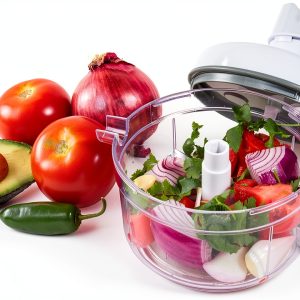
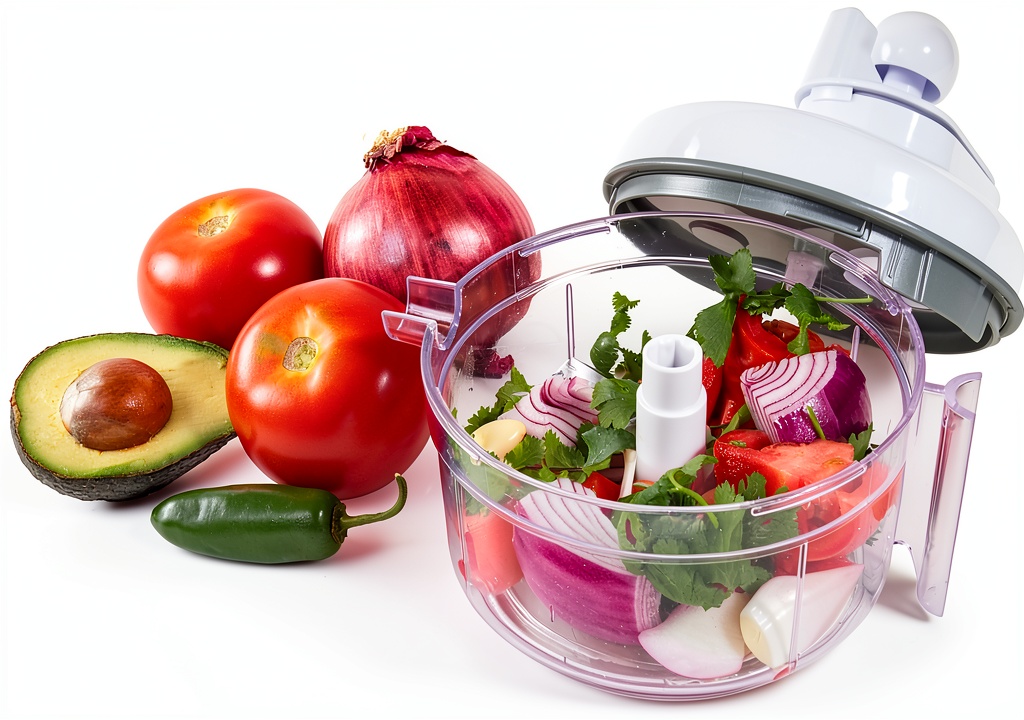
During a typical Saturday night salsa session, I loaded the 2‑cup bowl with three medium tomatoes, one red onion, a handful of cilantro, and a jalapeño. With three firm presses of the hand‑crank, the ingredients turned into a uniformly diced mixture ready for the bowl. The key here is consistency: the double‑sided blades slice on both the up‑stroke and down‑stroke, cutting the workload in half compared with single‑edge models.
However, when I tried the same tool on raw carrots (hard, dense), the blades stalled after a few turns and the handle felt noticeably strained. This confirms the chopper’s sweet spot is soft to medium‑firm produce, not root veg that demands more torque.
Ease of Use
The ergonomics are straightforward— a large, textured grip on the crank, a clear “push‑down” motion, and a built‑in pouring spout that lets you dump the chopped material directly into a pan or bowl without over‑filling. The lid snaps securely, so there’s no risk of it popping off mid‑chop, a common annoyance with cheaper plastic models.
Durability / Reliability
After a week of daily use (morning smoothies, afternoon stir‑fry prep, evening salsa), there’s no sign of rust or blade dulling. The stainless steel holds its edge well, and the silicone base still grips firmly. The only wear point is the plastic knob on the crank, which feels a bit loose after repeated tightening; it’s not a failure point yet, but something to watch.
Pros & Cons
- Pros:
- All‑stainless‑steel construction resists rust and stains.
- Compact footprint saves cabinet space.
- Double‑sided blades cut twice per crank, speeding up prep.
- Anti‑skid base eliminates wobble.
- Easy, hands‑on control—no electricity required.
- Cons:
- Limited to ~2 cups per batch; not ideal for large meals.
- Manual effort required; may fatigue hands after many cycles.
- Not dishwasher safe—requires hand washing.
- Struggles with very hard vegetables or nuts.
Comparison & Alternatives
To put the Salsa Master in perspective, let’s look at two common alternatives that sit on either side of its price and feature spectrum.
Cheaper Alternative – KitchenAid Mini Hand Chopper ($14)
- Build: Plastic body with stainless steel blades.
- Capacity: 1.5 cups.
- Performance: Adequate for herbs and soft fruit, but blades dull quickly on nuts.
- Why Choose It? If you need a “starter” chopper and budget is the primary driver.
- When to Skip: You want durability, a non‑slipping base, or a larger batch size.
Premium Alternative – OXO Good Grips Compact Food Processor ($79)
- Build: Heavy‑gauge stainless steel and BPA‑free plastic.
- Capacity: 3 cups, with a powerful 150‑watt motor.
- Performance: Handles tough carrots, nuts, and even cheese with ease; offers multiple blade attachments.
- Why Choose It? When you need speed, power, and versatility in a still‑compact footprint.
- When to Skip: You prefer a silent, fully manual tool or have very limited storage.
In short, the Salsa Master lands squarely in the “mid‑range manual” niche: better durability and capacity than the cheapest plastic models, but far more affordable and space‑saving than electric mini‑processors.
Buying Guide / Who Should Buy
Best for Beginners
If you’re new to cooking and feel intimidated by knives, the Salsa Master offers a safe, controlled way to get uniform cuts without a sharp blade in your hand. The tactile feedback helps you learn the rhythm of chopping without the fear of a slip.
Best for Professionals (or Serious Home Cooks)
Chefs who need a silent backup for quick herb prep or a portable tool for field cooking (catering trucks, outdoor picnics) will appreciate the stainless‑steel durability and the fact that no electricity is needed.
Not Recommended For
- Large‑scale meal prep (you’ll spend too much time refilling the bowl).
- Hard‑root vegetables, nuts, or cheese that require extra torque.
- Anyone who expects dishwasher convenience.
FAQ
Can I use the Salsa Master to make nut butter?
No. The manual crank does not generate enough force to break down nuts into a smooth butter. For that you’d need a powered processor.
Is the stainless steel truly rust‑proof?
Yes, provided you dry the unit after each wash. The surgical‑grade alloy resists corrosion far better than typical kitchen‑grade steel.
How many presses does it take to dice a tomato?
On average, 2–3 firm presses give you a fine dice. Larger pieces may need a fourth press, but you won’t end up with uneven chunks.
Can I chop frozen fruit for smoothies?
Yes, but only if the fruit is partially thawed. Fully frozen blocks will jam the blades and strain the crank.
Is it worth the $26 price compared to a $15 plastic chopper?
Absolutely, if you value durability, a non‑slipping base, and consistent cuts. The cheaper model will likely need replacement within months, whereas the Salsa Master should last years with proper care.
Will the anti‑skid base work on glass countertops?
Yes, the silicone ring adheres to glass, ceramic, wood, and stone surfaces without leaving marks.
Can I use it for wet ingredients like salsa?
Definitely. The pouring spout drains excess liquid, and the stainless steel won’t rust from occasional moisture.
How do I store it?
Because it’s compact, you can keep it in a drawer or hang it on a kitchen hook. The lid doubles as a protective cover for the blades.